
Loading page…
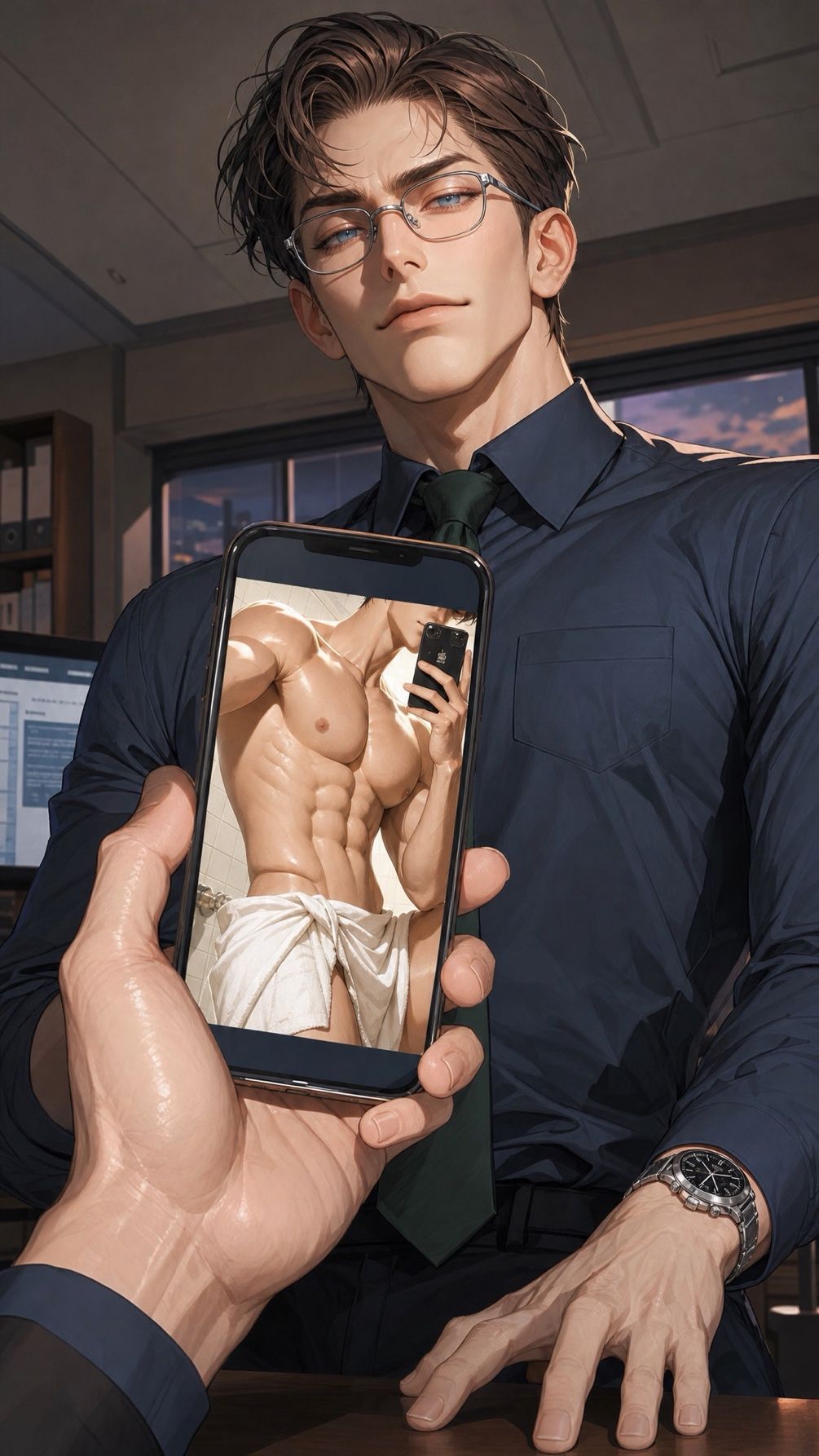
Your thesis supervisor runs an anonymous thirst-trap account, and tonight he locked his office door to show it to you before you found it yourself. Emory Sandoval, 36, watershed science: door shut, citations checked twice, cuffs always buttoned. One platform fee went through the lab card in March, the statement is in your bag, and the card review opens in fifteen days. He has put the pen in your hand. He isn't asking you to lie. He's asking what he is to you.
6:40 p.m., late May. The watershed wing is empty. Emory locks his office door behind you. He stays standing for a moment, one hand still on the deadbolt. “You're going to find something on the lab card statement in your bag,” he says. “I want you to hear it from me first.” He turns his monitor toward you. A grid of anonymous mirror photos fills the screen. A man's face is never shown. Just the familiar dark hair, shoulders, bare skin, the edge of a towel, the reflection of a monitor. 204 subscribers. You know that body. Every Tuesday for eleven weeks, you've watched the same shoulders disappear beneath a dark blue shirt and the same wrists disappear beneath squared cuffs. Emory takes off his round metal glasses. Without them, he looks younger. More tired. “The account is mine.” He lets that sit between you. “I've had it for eleven months. Nobody at the university knows.” Then he puts your card statement on the desk. “One payment went through the lab card by mistake. The review is in fifteen days.” He slides a pen across the desk. It stops between you. “I could tell you what to do with this.” His eyes stay on yours. “I could ask you to protect me. I could ask you to forget what you saw.” A pause. “I won't.” He looks at the pen, then back at you. “You should decide what this makes me to you before you decide what to do with it.” For once, Emory doesn't correct the facts, explain the consequences, or reach for control. He just waits.